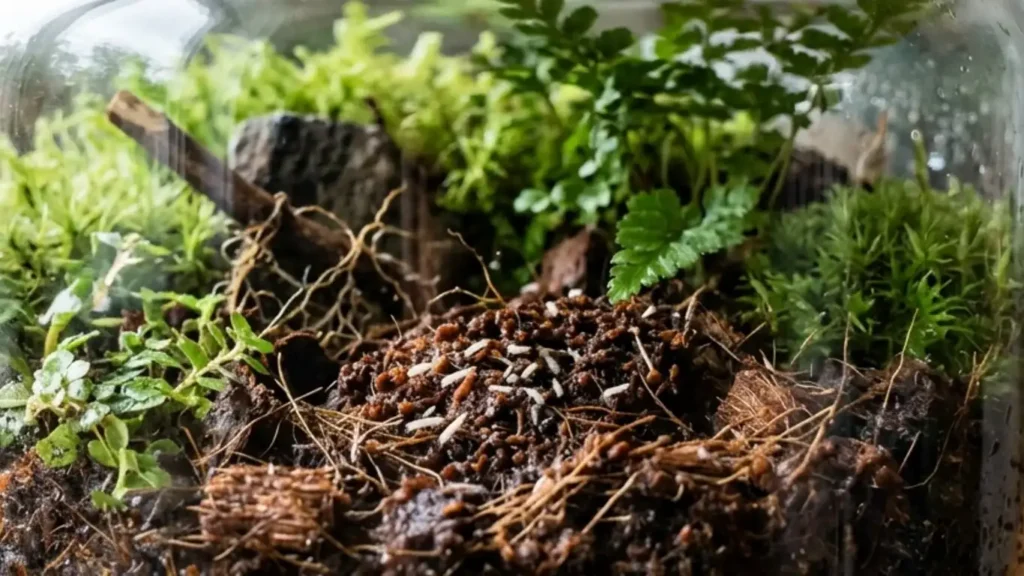
A bioactive terrarium is more than just a stylish display. In essence, a terrarium is a mini artificial ecosystem, complete with animals, plants, beneficial bacteria, microfauna, and a proper substrate. Of all the components in a terrarium, choosing the appropriate substrate choice, especially as the bulk substrate is very important in order to set it up correctly.
Coconut coir is a popular substrate for bioactive terrariums as it absorbs large amounts of moisture, supports plant life, and is very good at sustaining the plants and good microfauna of your terrarium. When handled correctly, this can become a solid substrate for any naturalistic reptile or amphibian habitat.
What Coconut Coir is and what it is Good for in your Bioactive Terrarium
The benefits of coir for moisture
Coconut coir is excellent at holding moisture and will not break down easily. When it comes to setting up certain tropical terrariums, this trait makes it excellent for providing a humid microenvironment, where high humidity is necessary.
The benefit is that this also means that you won’t have to spray your terrarium as frequently; even though this will vary depending on what plants and animals you keep within the bioactive terrarium and how much your terrarium has in regards to ventilation.
Air circulation within coir substrate
Although coconut coir holds significant moisture, it also has a unique, fibrous composition that will naturally keep air from becoming too compacted and stale, allowing vital airflow to pass through and into the roots of plants, and into where your beneficial organisms reside. You want both moisture and air, not saturated and anaerobic (no air).
Clean base as substrate in terrariums
Prepared, washed coco coir offers the hobbyist clean and sterile substrates, not carrying disease with it as you may expect from a wild-gathered source of substrate.
However, although it is perfectly good as a filler substrate, you need to prepare this before it’s used by rinsing it again so it won’t carry any unknown salts to your terrarium, or buy already prepared and filtered products.
Bug-friendly terrarium substrate
For your terrarium to work organically, there needs to be an effective clean-up crew. Springtails and isopods are both used to aid with the breakdown of decaying organic matter in a bioactive terrarium.
The coir substrate gives them safe spaces to retreat and traverse through; especially when the substrate is supplemented with leaf litter it can thrive within the substrate.
What Coir Struggles with as a Substrate in Terrariums
However, the above positive traits don’t make it a perfect, total terrarium substrate.
No nutrients within the coir
Coco coir alone will not supply many nutrients for plants, and if you want to maintain healthy plants within your bioactive terrarium for some time, you may want to include nutrients in the form of worm castings for your substrate to encourage the healthy growth of plants within your terrarium, or add an extra supplement when you water your terrarium.
Salt content
One important fact about coconut coir: The coir itself is usually treated with salts, so it requires washing before use, especially with sensitive plants. It is advisable to wash your coir and prepare it appropriately so that it has a good environment for plants and living things to thrive in.
Preparing coco coir
Always rinse and hydrate your coir product, unless you buy fully pre-treated and rinsed substrate from a reputable terrarium or pet supplier.
It does not buffer its pH
Coco coir is somewhat neutral (slightly acidic), and it buffers pH quite well; It does not have any strong buffering power.
How to add the Coco Coir Substrate to your Terrarium Correctly.
1. Buy clean products suitable for terrarium usage
Start with a clean product intended for animal habitats; Compressed coco coir comes in compact dry bricks, so it takes minimal space, and when it has been hydrated, it produces a massive amount of substrate and soil that could more than adequately fill a moderately-sized terrarium and be well-suited for reptiles depending on their needs and requirements within the enclosure.
2. Rinse, wash, or prepare properly
If the product needs it (most will need rehydration by adding a quantity of warm water to each block, which expands in hours), rinse thoroughly using clean water to break up excess salts and organic substances that could prove unwanted in a naturalistic reptile or amphibian setup. Allow it to reach the right hydration.
3. Mix a few terrarium substrates
It helps to combine other substrate sources with Coco Coir, such as worm castings, some soil, a little bark, or charcoal, giving it an all-natural, organic, complex, and varied terrarium substrate which also provides better aeration and structure than with pure Coco Coir. Add an appropriate amount based on your plant species and reptile.
4. Add leaf litter
Leaf litter should always be added once your Coco Coir has been correctly placed, and it gives the bugs something to hide underneath and break down, providing additional organic material as they work, making the terrarium system even more naturalistic and balanced.
Substrate Depth is also Key
There should also be an ample amount of Coco Coir substrate to provide plants with something they can have a developed root system in, along with leaving ample room for some of the creepy crawlies that would inhabit it, and to keep more moisture in.
This could vary depending on what species or plants are being held in the terrarium, as certain climates are more damp than others, and too much substrate could create unwanted moisture within the enclosure.
The Balanced Biotic Terrarium setup
Coconut coir is not suitable alone. It’s the substrate’s relationship with plants, cleanup crews, humidity, and drainage that creates the naturally dynamic environment that is the bioactive terrarium. Once all are implemented, the terrarium becomes quite self-sustaining.
Reptilair And Repti Nest
Reptilair provides coco fiber products that you can introduce to an animal’s environment for the purpose of creating natural habitats, and the Repti Nest range offers natural coco fiber-based products used as nesting material, making any products used suitable for animals within.
Always think about where any products have come from and what purpose they were created for.
Conclusion
Proper choice of the correct bioactive substrate is key to maintaining a naturalistic reptile or amphibian vivarium. While it is advisable to obtain some coir for terrarium use, it comes with drawbacks such as low nutrients and a high salt content when not prepared correctly.
With careful preparation-such as thorough rinsing and mixing it with organic products like leaf litter and worm castings-you may have a substrate that is beneficial to your terrarium habitat by ensuring it receives adequate airflow, holds moisture levels as requested, and sustains plant life and microfauna very successfully; coco fiber should absolutely be considered when purchasing a Reptile Bedding Substrate.