Your first pet tarantula can be both an exciting and relatively low-maintenance animal. They do require less daily attention compared to many other pets, but they still rely on you to create the appropriate environment and to manage their needs such as habitat, bedding, food, water, and physical contact.
For a new keeper, selecting a docile, terrestrial species of tarantula and housing it within a secure enclosure are essential first steps. Creating a simple enclosure with suitable substrate, an area for hiding, and access to fresh water will be a start for giving your tarantula a happy and healthy existence.
How to Select Your First Tarantula
For a new keeper, it is strongly recommended to select a docile, sturdy and terrestrial species. Ground-dwelling species and/or certain New World tarantulas tend to be a better start for beginners, as they appear to be more forgiving of human errors while beginners are just learning the characteristics of their pet and their environmental requirements.
A Few Recommended Beginner Tarantula Species include Arizona Blonde, Curly Hair, and Chaco Golden Knee.
Some of the more commonly recommended beginner species are listed below;
– Arizona Blonde Tarantula (Aphonopelma chalcodes*)
– Curly Hair Tarantula (Tliltocatl albopilosus*)
– Chaco Golden knee Tarantula (Grammostola pulchripes*)
All of these species appear to be good beginners when considering their behavior. Species that are arboreal, potentially very defensive as well as fast and highly irritable will probably be best left until after a bit more experience has been gained.
Understanding the specific species’ behavior before its introduction will give you a helping hand when setting up a home for it, and then again with the daily care.
Setting up a Tarantula Enclosure
A spider’s tank does not need to be complex. A small, 5- gallon plastic or glass tank would suffice for some terrestrial tarantulas; however, size really needs to be species-relevant.
The tank needs to be secured appropriately; Tarantulas are capable of crawling through amazingly small gaps, a tight-fitting lid is therefore vital. It also needs plenty of ventilation and should always be secure with its closing latch!
Choosing the right substrate for the enclosure
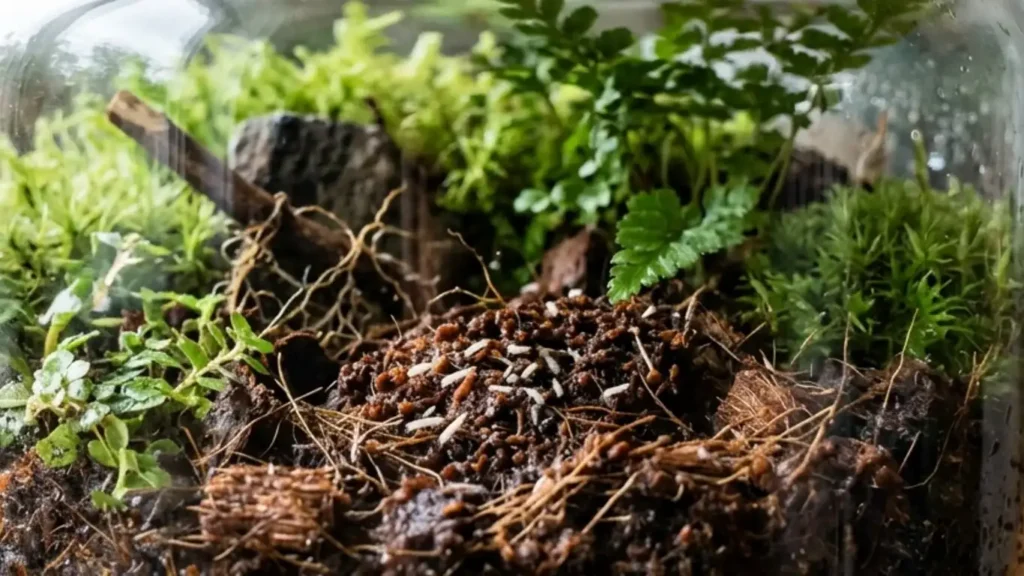
A substantial choice is the ‘medium’ which should be in your tarantula’s enclosure – this medium needs to be correct for the individual tarantula, allowing it to walk on surfaces, providing access for it to burrow as well as retaining the humidity level of the tank.
Roughly 3-6 inches of “clean” non-chemically sourced topsoil OR coconut husk fiber type medium will ensure adequate substrate depth for burrowing species; it may, however, be adjusted based on age and species.
Any “Reptile Bedding Substrate” must be clean and free from pesticides, fertilizers, pesticides, or harmful additives. Coconut fiber substrates retain high levels of moisture, a quality that many species need but some do not! Tarantula turf and similarly treated substrate may also be obtained but again are varied depending on individual species.
Providing a home for your tarantula
A small, artificial dwelling for a spider will give them a safe area to relax undisturbed. Artificial logs of a sort, a broken clay pot or a cork log can provide all a spider needs for an area they like to hide. They should also have readily available access to water from a relatively shallow and stable water dish so the water can’t easily be knocked over, but not so shallow that there is a risk.
What do tarantulas eat and how much of it?
A tarantula’s primary diet relies solely on live invertebrates; typical feeders for most hobbyists tend to be crickets, worms, and suitably sized roaches. All prey must be a good size, not large enough to kill a young spider, not too small that the adult spider takes no notice either.
The quantity that the spider may want will primarily depend upon the individual spider itself but once again is species and metabolism relevant. Keepers don’t feed spiders at any regular time, or in specific quantities; instead, when looking for an appropriate feed, consult your spider’s abdomen, and if you notice it has significantly shrunk compared to its normal size, this suggests there is likely some room within its abdomen for any potential food!
How much will a Tarantula Eat and When.
Food preferences obviously differ with age; a juvenile tarantula will want a feed every approximately 7-10 days, and adults roughly every 10-2 weeks. Nevertheless, these suggestions are not always applicable because tarantulas can sometimes go for prolonged periods without food, and these are predominantly linked with previous or following molting events. Do remember to remove prey species and food that the spider will not eat.
Giving your Tarantula hydration
Tarantulas do require an abundant water supply to survive, and hence, water should always be accessible from an appropriately sized and stable water dish. For a species that may desire higher humidity/moisture levels, a portion of its enclosure substrate may be carefully overflowed while keeping an eye on humidity and temperature and ensuring excellent ventilation! It must not become overly moist within the entirety of the enclosure.
Handling and Rules regarding keeping Tarantulas
Tarantulas and most arthropods, for that matter, should always be treated more as creatures to be observed than handling pets, simply because they do not form bonds like domestic cats and dogs would. Their natural behavior patterns should not be disrupted; you do not need to ‘pet’ or stroke this creature, so there is no benefit from doing so, and all it will do is risk stressing the spider, and yourself, of course, with regards to its safe handling (which, as of now, means the animal shouldn’t have any)!
Safely introducing your Spider to new enclosures/residence.
Moving spider from place to place should ideally only occur when essential; you’ll notice that most owners will attempt to ‘trick’ their spider to climb into the container to prevent any chance of them coming into direct physical contact with the animal. A slightly smaller container should then be brought directly down to cover their natural habitat whilst being slightly larger than the spider’s enclosure so they should have sufficient room.
Maintaining an Appropriate Climate For Your Spider.
The importance of viewing your spider, or species behavior, routinely is essential knowledge for any new keeper. Looking over your tank regularly helps insure there is plenty of water, that the levels of moisture in the substrate are not falling below desired points (or conversely, are above desirable limits) and that there isn’t an overload of “stale prey” sitting in the corner of the spider’s home.
Conclusion
Keeping your first pet tarantula will provide a unique experience for the collector. The most important advice you can be given is to begin with species known for docile temperaments that are fully terrestrials so you can become comfortable around these creatures in addition to setting up the simple and most appropriately managed secure enclosure. Feeding the species with small, readily consumable insects and having regular water sources and places for the spider to retreat/hide will all ensure a satisfied tarantula!